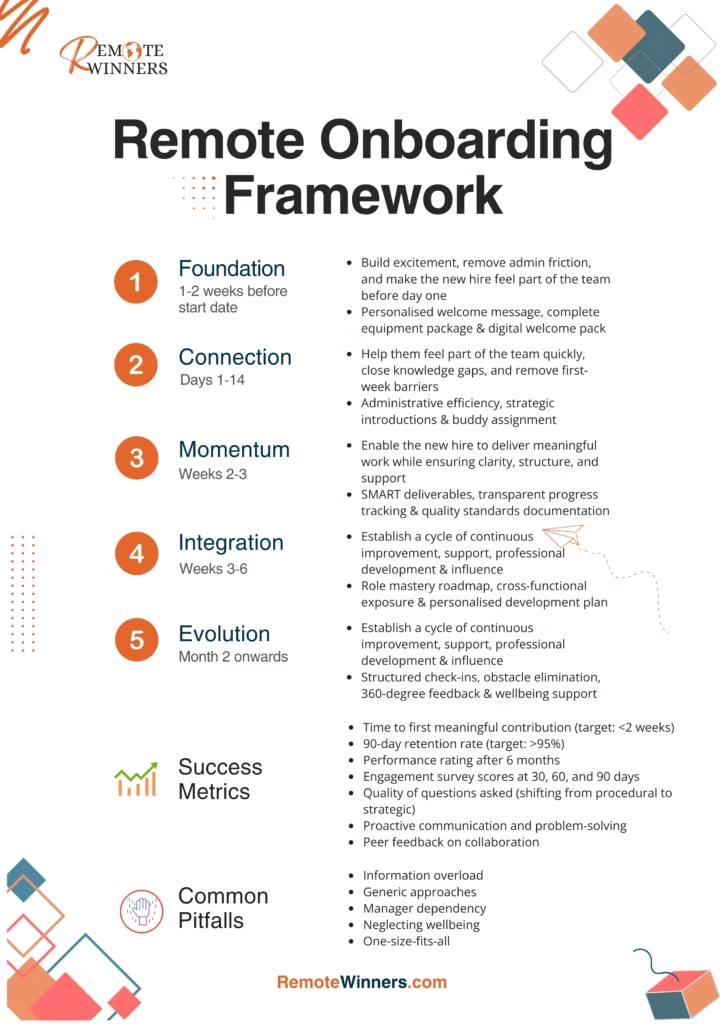
Remote onboarding can make or break a new hire’s success and is pivotal for an organisation’s longevity. Without the natural in-person office interactions, remote employees need structured support to feel connected, confident, and productive. This remote onboarding framework will help you transform the typical “sink or swim” approach into a strategic pathway that sets every new hire up for long-term success.
1. Foundation (1-2 weeks before start date)
Purpose: Build excitement, remove admin friction, and make the new hire feel part of the team before day one.
Key Actions:
- Personalised welcome message from their direct manager or CEO (not HR) sharing genuine excitement about their arrival
- Checks: Mandatory compliance checks completed early (DBS check in the UK)
- Complete equipment package delivered 3-5 days early: laptop, noise-cancelling headphones, ergonomic mouse, ergonomic keyboard, wrist/arm rest, laptop stand, and branded welcome items (notebook, water bottle, or local coffee voucher)
- Digital welcome pack containing:
- Employee handbook with remote work policies
- System access instructions with temporary credentials
- Tool download links and installation guides
- First two weeks’ schedule with clear expectations
- A communication map, explaining the chain of communication (e.g., who to contact, when to DM or email, and when to use video calls).
Additional:
Video Introduction: Send a short video from the team introducing themselves and welcoming the new hire.
2. Connection (Days 1-14)
Purpose: Help them feel part of the team quickly, close knowledge gaps, and remove first-week barriers.
Key Actions:
- Administrative efficiency: Complete all HR tasks within the first 2 hours, not spread across days
- Strategic introductions: Schedule 30-minute coffee chats with each immediate team member, including their working hours to build awareness
- Buddy assignment: Pair them with a peer (not manager) who’s been with the company 6-18 months and shares similar interests or background
- Knowledge repository access: Curate 5-7 essential documents/wikis they need immediately, not everything at once
- Support system clarity: Create a simple escalation chart showing who handles what (tech issues → IT Slack channel, project questions → buddy, urgent matters → manager)
Additional:
Trivia Session: Host a “Getting to Know You” trivia session where team members answer light, fun questions about themselves — this breaks the ice better than just job role summaries.
3. Momentum (Weeks 2-3)
Purpose: Enable the new hire to deliver meaningful work while ensuring clarity, structure, and support.
Key Actions:
- SMART deliverables: Define 2-3 specific, measurable tasks with clear success criteria and realistic deadlines
- Transparent progress tracking: Use visual project management tools (Asana, Monday, or Trello) where everyone can see task progression
- Quality standards documentation: Create “Definition of Done” templates showing what excellent work looks like in your organisation
- Priority framework training: Teach your company’s specific prioritisation method (OKRs: setting ambitious goals and tracking progress, RICE scoring: data-driven prioritisation of features or initiatives, or MoSCoW: aligning stakeholders on essential versus optional features) through real examples
- Ownership mindset: Assign one small project they can fully own from conception to completion
Additional:
Shadow Sessioning: Schedule 2-hour virtual sessions where new hires observe experienced colleagues handling real work scenarios such as client calls, problem-solving, or strategic planning.
4. Integration (Weeks 3-6)
Purpose: Establish a cycle of continuous improvement, support, professional development & influence.
Key Actions:
- Role mastery roadmap: Create a 90-day learning path with specific milestones and competency checks
- Cross-functional exposure: Introduction to 2-3 other departments through structured “lunch and learns”
- Personalised development plan: Combine role requirements with their career aspirations and learning preferences
- Remote work optimisation: Offer coaching on workspace setup, time management techniques, and digital wellness practices
- Cultural integration: Share unwritten rules, company traditions, and team dynamics that aren’t in the handbook
Additional:
Reverse Mentoring: Have new hires share insights from their previous company or industry, positioning them as contributors to organisational learning from week one.
5. Evolution (Month 2 onwards)
Purpose: Establish a cycle of continuous improvement, support, professional development & influence.
Key Actions:
- Structured check-ins: Weekly 15-minute progress reviews transitioning to bi-weekly, then monthly strategic development conversations
- Obstacle elimination: Proactively identify and remove barriers through regular “stop, start, continue” feedback sessions
- 360-degree feedback: Collect input from peers, stakeholders, and direct reports (if applicable) every quarter
- Personalised learning ecosystem: Curate learning paths using platforms like Coursera for Business, MasterClass for Business, or internal knowledge sharing sessions
- Wellbeing support: Provide mental health resources, fitness stipends, and encourage work-life integration practices
Additional:
Growth Portfolio: Help each employee build a digital portfolio showcasing their achievements, learnings, and contributions, serving as both motivation and career development tool.
Success Metrics to Track
A framework needs a way to measure its success and there is no exception to this. The following criteria can be used to measure the impact of this remote onboarding framework.
Quantitative Measures:
- Time to first meaningful contribution (target: <2 weeks)
- 90-day retention rate (target: >95%)
- Performance rating after 6 months
- Engagement survey scores at 30, 60, and 90 days
Qualitative Indicators:
- Quality of questions asked (shifting from procedural to strategic)
- Proactive communication and problem-solving
- Integration with team culture and values
- Peer feedback on collaboration
Common Pitfalls to Avoid
It is important to avoid following common pitfalls at every stage in this remote onboarding framework.
- Information overload: Don’t offload everything on them at once
- Generic approaches: Tailor the experience to individual learning styles and career goals
- Manager dependency: Build peer support networks, not just top-down relationships
- Neglecting wellbeing: Remote work can be isolating. Therefore, actively address mental health and work-life balance
- One-size-fits-all: Senior hires need different support than junior employees
The Bottom Line
Exceptional remote onboarding isn’t about following a checklist. It’s about creating human connections, providing clear pathways to success, and demonstrating genuine investment in each person’s growth. When done well, this framework doesn’t just improve retention; it accelerates performance, builds stronger teams, and creates advocates for your company culture.
The companies that master remote onboarding today will have a significant competitive advantage in attracting and retaining top talent in our increasingly distributed world.
💾 Remote Onboarding Framework – PDF download
🎯 Need Expert Help?
If you’re facing challenges with remote work, I offer 1:1 coaching and tailored support to help you succeed at remote setup. Whether you’re just starting out, growing as a remote contributor, leading a team, or launching a remote-first start-up, Remote Winners offers targeted 1:1 coaching to help you thrive in a distributed world. We also provide tech consultancy services—from idea-to-product guidance to cloud deployment and cybersecurity reviews—to help organisations strengthen their technology and processes.
If you are unsure where to begin, drop us a message and we’ll be in touch.