I have been in the software field for 16 years. Over 7 of those years have been fully remote, and for more than 5 years I have led engineering teams fully remotely. Over that time, I have learned that the most valuable signals about an engineer rarely show up in performance reviews. They show up in small, unplanned moments in the most unexpected ways.
This post is about one of those moments and what it taught me about engineering ownership.
The ticket that brought it back
A new ticket landed for an area of our frontend. My senior frontend engineer looked at it and asked:
“Do you remember the ticket I raised two years ago to refactor this section?”
To be honest, I didn’t remember it off the top of my head. However, he did.
He then walked me through it. The constructor was doing far too much. Logic that belonged in separate services was sitting in the component. Functions could be extracted and shared across other components. Doing the refactor now would make the new ticket easier, cleaner and, most importantly, scalable.
The question that impressed me most
Then he asked:
“Is it feasible in this release? Or should we prioritise it for the next one?”
He wasn’t just asking to clean up code. He was weighing value against timelines. He was thinking like an owner, not an assignee. 💡
What engineering ownership looks like in practice
That one conversation told me three things about him:
- He sees a system, not just a UI ticket. He understood how one component affects the wider codebase and future work.
- He remembers the debt he has spotted, even years later. Technical debt didn’t disappear from his mind just because it left the sprint board.
- He knows good engineering still has to fit a delivery plan. He framed the refactor around release timelines, not just code quality.
In my experience, that combination is rare. Plenty of engineers can spot problems. Fewer write them down. Even fewer connect them to today’s work and come up with a realistic proposal.
Why this matters more in remote teams
In a remote team, you can’t rely on coffee station conversations to surface hidden problems. Context lives in tickets, documentation and the memory of the people who care. Engineers who log technical debt, revisit it and tie it to delivery become a quiet source of continuity across time zones and release cycles.
You can’t assign ownership
Realistically, you cannot quite assign this kind of ownership to someone. You can only hire great engineers to the best of your experience, recognise those traits and make room for them. That means giving engineers space to raise refactors, taking those proposals seriously and making prioritisation a shared conversation rather than a top-down decision.
Why engineering ownership matters for an engineer’s career progression
For me, as a line manager, taking ownership showcases strong leadership traits. For someone to own something, from inception to the delivery of the intended outcome, that person has to drive things forward.
When you spot something like this in your team, even a small yet insightful contribution that will continue to deliver results for years to come, you should guide them towards their career progression. In my experience, employees stick around longer and are happier when their line manager actively discusses their career progression and helps them achieve their career goals.
In a nutshell
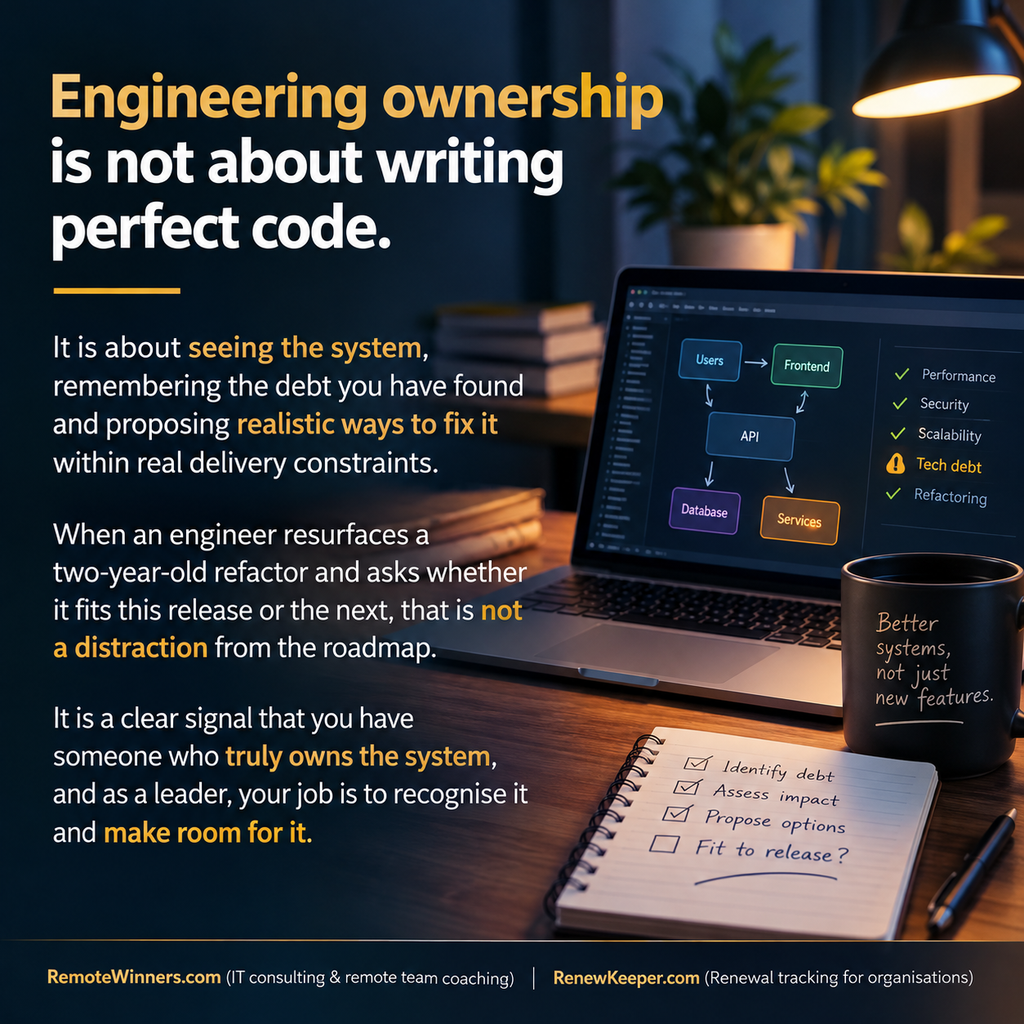
Engineering ownership is not about writing perfect code or pushing every refactor through. It is about seeing the system, remembering the debt you have found and proposing realistic ways to fix it within real delivery constraints. When an engineer resurfaces a two-year-old refactor and asks whether it fits this release or the next, that is not a distraction from the roadmap. It is a clear signal that you have someone who truly owns the system, and as a leader, your job is to recognise it and make room for it.
Leading a remote engineering team and want to build this kind of ownership culture? Get in touch with RemoteWinners to talk through hiring, team structure and remote leadership.
🔗 Related: Remote Work Productivity: Why Not Every Day Needs to Be in 6th Gear
📌 Follow Anjana Silva (LinkedIn) for remote work and tech tips for remote startups, tech organisations, and tech professionals.