


In an office setup, recognition happens by accident. A quick nod on the way to the kitchen, an “oh nice one” in the corridor, a manager overhearing a client compliment. None of that reaches your remote team. If you don’t put efforts to recognise them deliberately, silence becomes the norm.
That silence gets interpreted differently in everyone’s head. People start wondering whether their work is making a difference, whether they’re being overlooked, whether the next round of promotions has already been decided without them. Recognition is what fills the gap the office used to promote for free.
The good news is you don’t need a big budget or a new HR tool. You need a small set of habits that make your team members feel seen and appreciated. Here are 11 simple ones I keep coming back to.
1. Praise during one-on-one meetings
One-on-ones are the safest place to tell someone their work has genuinely impressed you. A specific, private “that investigation changed how we’re thinking about secure coding” lands with far more weight than a generic “great job” dropped into a group chat.
2. Public praise
Team meetings, all-hands and shared channels give quiet contributors the visibility they’d never earn from behind their own screen. Naming the person and the specific thing they did makes it clear the recognition is real, not something to fill an agenda.
3. Handwritten notes
A card in the post cuts straight through the digital notifications your team is drowning in. This one is my favourite because it takes effort, and people can tell that you have genuinely made an effort. Sending a handwritten card for your team member’s birthday or during a festive season is a great way to improve their morale.
4. Recognition board
A dedicated Slack or Teams channel gives everyone a place to celebrate wins as they happen, instead of waiting for the next review cycle. Kept alive over time, it also becomes a running record or a journal of what your team actually values.
5. Shoutouts on social media
A LinkedIn post naming someone’s contribution reaches their network, their family, and future employers who’ll one day see them differently. It also signals to the wider world that your company treats its people as people, not resources.
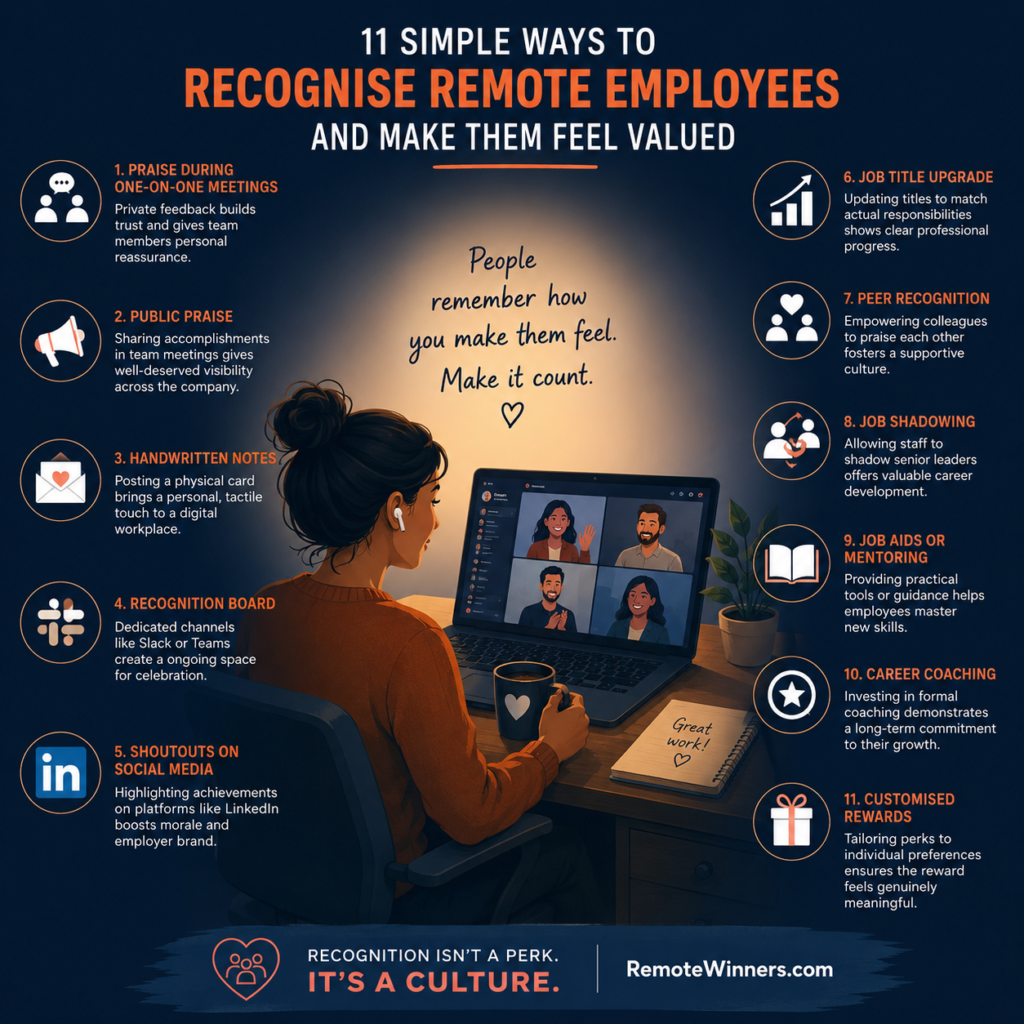
6. Job title upgrade
When someone has quietly outgrown their title, updating it is often the single most motivating thing you can do. It costs nothing and gives them something real to point to on their CV and LinkedIn.
7. Peer recognition
Praise from a colleague who watched you solve the problem often means more than praise from a manager who only saw the outcome. Building this into your team’s rhythm creates a culture where people look out for each other’s wins, not just their own.
8. Job shadowing
Letting a team member sit in on your senior meetings gives them a view of how decisions actually get made. It’s trust and career development rolled into one, and it costs you nothing but a simple Teams/calendar invite.
9. Job aids or mentoring
A well-timed template, checklist or short mentoring session helps someone level up faster than any training video. It also tells them you’ve noticed where they’re stretching, and you want them to succeed at it.
10. Career coaching
Paying for formal coaching signals a level of investment that annual reviews and Slack praise can’t match. It says you’re planning for their next role, not just filling the current one.
11. Customised rewards
A generic gift card feels like it came from a spreadsheet. A reward that matches what someone actually enjoys, whether that’s a course, a piece of kit, or an extra day off, shows you were paying attention.
In a Nutshell
Recognition doesn’t need a budget line or a new HR tool. It needs someone deciding, this week, to actually do it. Pick two or three from this list and put them into your calendar. The people who feel seen at work are the ones who stay, grow, and recommend you to the next great hire.
Which of these do you already do well, and which one have you been meaning to start? Let me know in the comments. 👇
🔗 Related: 5 Timeless Remote Work Skills That Outlast Any Tool or Tech Stack
📌 Follow Anjana Silva (LinkedIn) for remote team building and tech tips for remote startups.
♻️ Share this with a manager who leads a distributed team.



Pingback: 4 Human Skills To Level Up Your Engineering Career - Remote Winners
Pingback: What Taking Ownership at Work Really Means (and why it drives your career) - Remote Winners