


The biggest trap in remote work is the lack of physical movement. We have all been there: you look up from your screen and realise your neck is stiff, your knees feel funny or locked, and your focus is slowly and steadily being lost.
The scariest part is, you looked up the time, and it’s 7 pm, and you haven’t even recorded 100 steps in your smart watch 😱. I always try to break the working pattern and mix things up whenever possible. Hence, doing pilates, stretching, core strengthening, walking, running, cricket nets & playing cricket at weekends in summer.
If you are looking for a quick way to refresh your thinking, try these resets. (Note: I am not a medical expert; these are simply things I do. Always seek medical advice before starting activities that involve pushing your physical limits.)
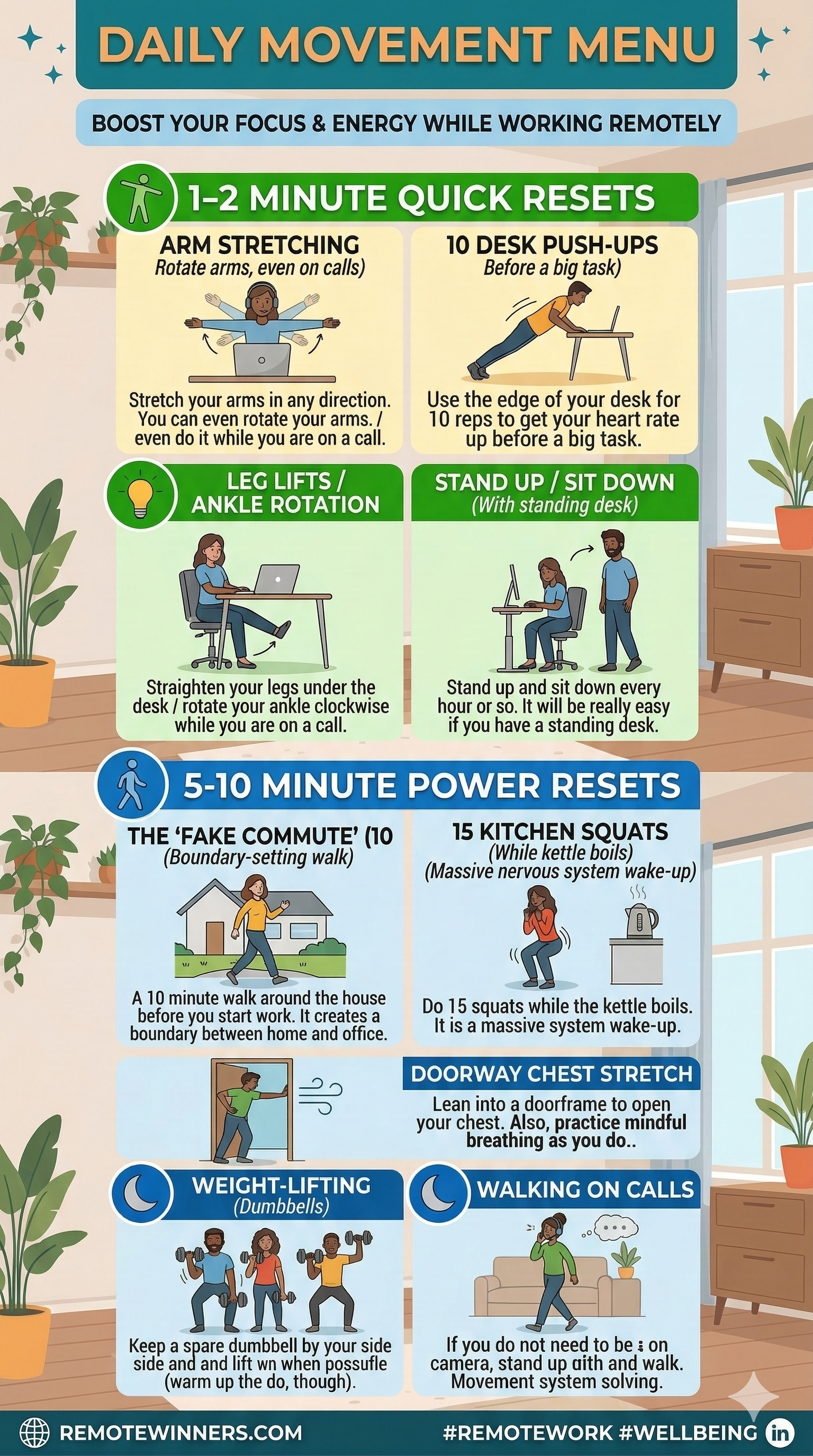
1–2 Minutes resets
- Arm stretching: Stretch your arms in any direction. You can even rotate your arms. You can even do it while you are on a call.
- Desk push-ups: Use the edge of your desk for 10 reps to get your heart rate up before a big task.
- Shoulder blade pinches: Pull your shoulders back and down as if holding a pencil between them. It is the perfect antidote to laptop slouching.
- Invisible leg lifts/ankle rotation: Straighten your legs under the desk / rotate your ankle clockwise while you are on a call
- Stand up/sit down: Stand up and sit down every hour or so. It will be really easy if you have a standing desk. (I bought myself a decent standing desk last year, and I am in love with it so much. I only wish I had bought it sooner.)
- Stare at distance: Every hour, look through your window to stare at a distant object for at least 20 seconds (The optician I recently went to recommended this 😊)
5 –10 Minutes resets
- The fake commute: A 10-minute walk around the house before you start work. It creates a clear boundary between home and office. It is always good to keep a record of your daily steps (e.g., smartwatch).
- Kitchen sink squats: Do 15 squats while the kettle boils. It is a massive wake-up call for your nervous system.
- Doorway chest stretch: Lean into a doorframe to open your chest.
- Weight-lifting: Keep a spare dumbbell by your side and lift when possible (warm up the muscle before you do, though)
- Walking on calls: If you do not need to be on camera, stand up and walk. Movement often leads to better problem-solving.
- Meditation: Sit on a low chair or mat on the floor to practice loving kindness meditation. Do it as a daily ritual, ideally before you start your day.
I have also been following some Pilates and strength training routines by Rachel, which were recommended to me by my wife. If you are looking for beginner-friendly Pilates, I highly recommend Rachel’s Fit Pilates. Here are some of my favourite programmes of hers.
- 10 min Cardio Workout: https://www.youtube.com/watch?v=8wxmFYaJXH4
- Beginner Pilates Challenge: https://www.youtube.com/watch?v=-nvGeebjehc
- Arms Workout: https://www.youtube.com/watch?v=W8XgJKXneOY
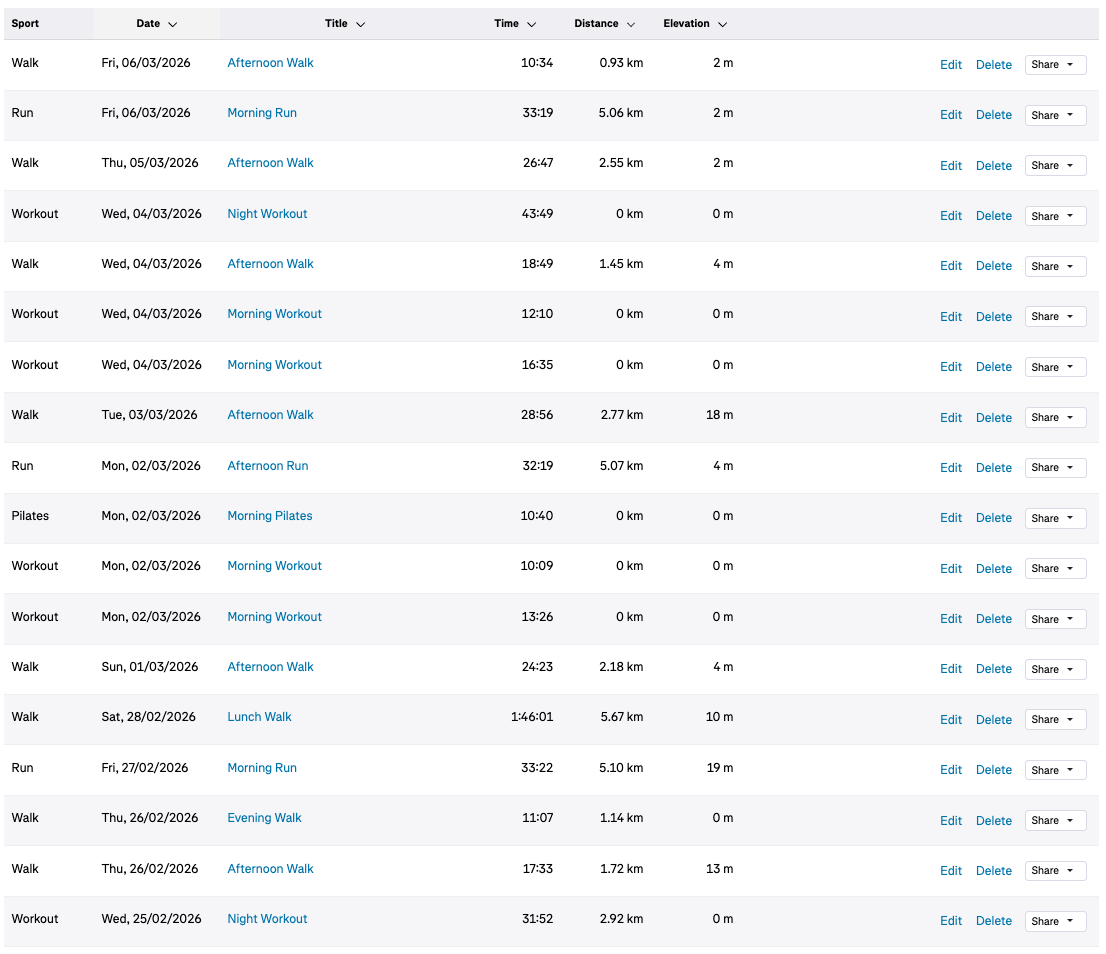
In a Nutshell
Focus is a mental resource achieved by embracing physical health and mental health. If you do not move your body, your brain eventually slows down. Don’t let the comfort of working from home take over your active lifestyle. No matter whether its taking 500 steps or 8000 steps daily, invest in a physical routine that is enjoyable, rewarding and sustainable.
I hope you enjoyed this post. Which one of these are you already doing? Or do you have a different set of movement breaks? Let us know in the comments below 👇
If you enjoyed this post, you might also like my previous article on how to handle feeling isolated when working from home: Feeling lonely and isolated from colleagues


Pingback: 3 Healthy Additions for an Ergonomic Home Office Setup - Remote Winners